54B, Tailstoi Town 5238 MT,
La city, IA 522364

Drive Safe & Smart with Us
Every pain avoided but in certain circumstances and owing to the claims of duty or the obligations of business it will frequently occur that pleasures have to be repudiated and annoyances accepted selection he rejects pleasures to secure.

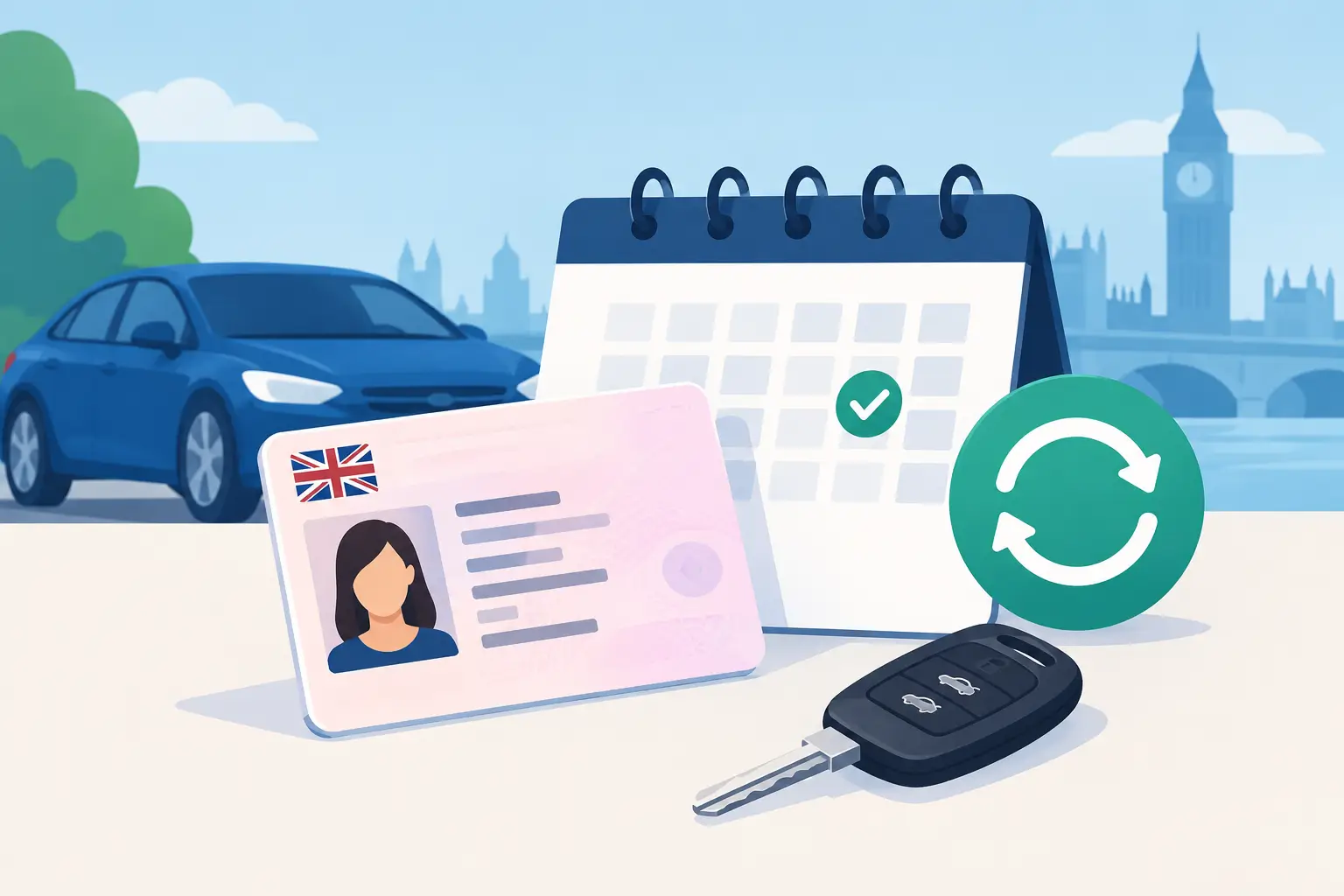
That small date printed beside “4b” on your photocard is easy to overlook – until a hire company, employer or police check brings it to your attention. If you are asking, “when do you have to renew your UK driving licence?”, the answer depends on your age, the type of licence you hold and whether anything has changed in your health or personal details.
For most car drivers, the key dates are straightforward. Renewing on time protects your entitlement to drive and avoids the unnecessary stress of discovering an expired licence when you need your car most.
When do you have to renew your UK driving licence?
Most full UK photocard driving licences must be renewed every 10 years. This is primarily to keep the photograph current, not because your right to drive a car ends after a decade. Check the front of your photocard for the expiry date next to section 4b. That is the date you need to act on.
The DVLA usually sends a reminder before the photocard expires, but do not rely on it as your only prompt. Your address may be out of date, or the letter may not reach you. Make a note in your mobile phone calendar a few months beforehand, particularly if you use your licence for work, car hire or identification.
You must also renew your ordinary car licence when you reach 70. After that, renewal is required every three years. There is no standard fee for renewing a licence at 70 or over, although you will need to confirm that you still meet the eyesight and medical standards for driving.
Your 10-year photocard renewal
If you are under 70 and hold a standard photocard licence, the usual renewal point is the 4b date. You will need a recent suitable photograph unless you are able to use a digital photo already accepted through the online process.
Do not confuse the 4b date with the dates beside your driving categories. Section 4b relates to the photocard itself. The category dates show how long you hold entitlement to drive particular vehicle types. For most learner and newly qualified drivers, category B is the important one – it covers cars.
Renewing at 70 and beyond
When you turn 70, your licence expires even if the date on your photocard appears to be later. You need to renew it to continue driving. The renewal application asks you to declare that you meet the required eyesight standard and to provide relevant medical information.
This process repeats every three years. It is designed to keep drivers safe while allowing people who are fit to drive to remain independent. Age alone does not mean someone is unsafe behind the wheel. What matters is whether they can see clearly, make safe decisions and control the vehicle properly.
Medical conditions can change the renewal date
You have a legal duty to tell the DVLA if you develop a medical condition or disability that could affect your driving. This does not automatically mean you will lose your licence. In many cases, the DVLA may ask for more information, issue a short-term licence or confirm that you can continue to drive as normal.
Conditions that may need to be reported include certain visual problems, epilepsy, strokes, diabetes treated with insulin, serious heart conditions, sleep apnoea that causes excessive sleepiness, and neurological conditions. The exact rules depend on the condition, treatment and vehicle category, so do not make assumptions based on someone else’s experience.
If the DVLA issues a short-term medical licence, it will have its own expiry date. You must renew it when it ends, which may be after one, two, three or five years. Keep an eye on that date and start the process early where possible, as medical assessments can take longer than a routine photocard renewal.
You must also report a condition that gets worse or begins to affect you differently. Safe driving means being honest about changes that could affect concentration, reaction times, vision, awareness or vehicle control.
Changing your name or address is different from renewal
You should update your driving licence when your name or address changes. This is not the same as renewing an expiring photocard, but it is still essential. A licence with an old address can mean you miss important DVLA correspondence, including reminders and penalty notices.
An address change is normally free. If you have changed your name, you will generally need evidence of the change, such as a marriage certificate or deed poll. If your photocard is close to expiring at the same time, dealing with both matters together can save you from repeating the process soon afterwards.
A lost, stolen or damaged licence should be replaced as soon as possible. You should not wait until its renewal date. Your licence is an important legal document, and replacing it promptly makes it easier to prove your entitlement if needed.
Paper licences and vocational categories need extra care
Some drivers still have an old-style paper licence issued before photocard licences became standard. If it remains valid and the details are correct, it does not normally need renewing every 10 years. However, if you change your name or address, lose the licence, or need to replace it for another reason, you will usually be issued with a photocard licence instead.
The rules can be more frequent for drivers with vocational categories, such as lorries, buses and minibuses. Group 2 licences commonly require medical checks and have different renewal arrangements, particularly from age 45 onwards. If you drive professionally, check the expiry dates for every category you rely on rather than assuming your car licence date covers everything.
This is one area where the detail matters. A valid category B entitlement does not guarantee that your entitlement to drive a larger vehicle is still valid.
How to renew without leaving it too late
For a routine photocard renewal, online renewal is often the quickest option. You will need your current licence details and may need to provide a recent photograph. A paper application is also available for drivers who prefer it or cannot renew online.
Before applying, check that your name, address and photograph are correct. If you are due to travel, hire a car or start a new job that requires driving, allow plenty of time. Processing times can vary, and a last-minute application can create avoidable disruption.
In some circumstances, you may be able to keep driving while a renewal application is being processed. This depends on meeting specific legal conditions, including having held the relevant licence and continuing to meet medical requirements. It does not apply in every situation, especially where the DVLA is considering medical information. If there is any doubt, wait for confirmation rather than taking a risk.
A quick check before your next lesson or journey
Take out your licence and look at the front. Check the 4b date, your address and the spelling of your name. Then look at the vehicle categories on the back if you drive anything other than a car.
For learner drivers, a provisional licence is also a legal requirement before getting behind the wheel on public roads. It has an expiry date too, so make sure it remains valid throughout your lessons and before you book your practical test. At CJL Driving School, we encourage learners to sort these practical details early, so their progress towards test day stays focused and confident.
Your driving licence is not just a card in your wallet. It confirms that you are entitled to drive and that the information connected to that entitlement is current. Check it now, set a reminder before the expiry date, and give yourself the best chance to keep driving safe and smart when the time comes.

Leave A Comment