54B, Tailstoi Town 5238 MT,
La city, IA 522364

Drive Safe & Smart with Us
Every pain avoided but in certain circumstances and owing to the claims of duty or the obligations of business it will frequently occur that pleasures have to be repudiated and annoyances accepted selection he rejects pleasures to secure.

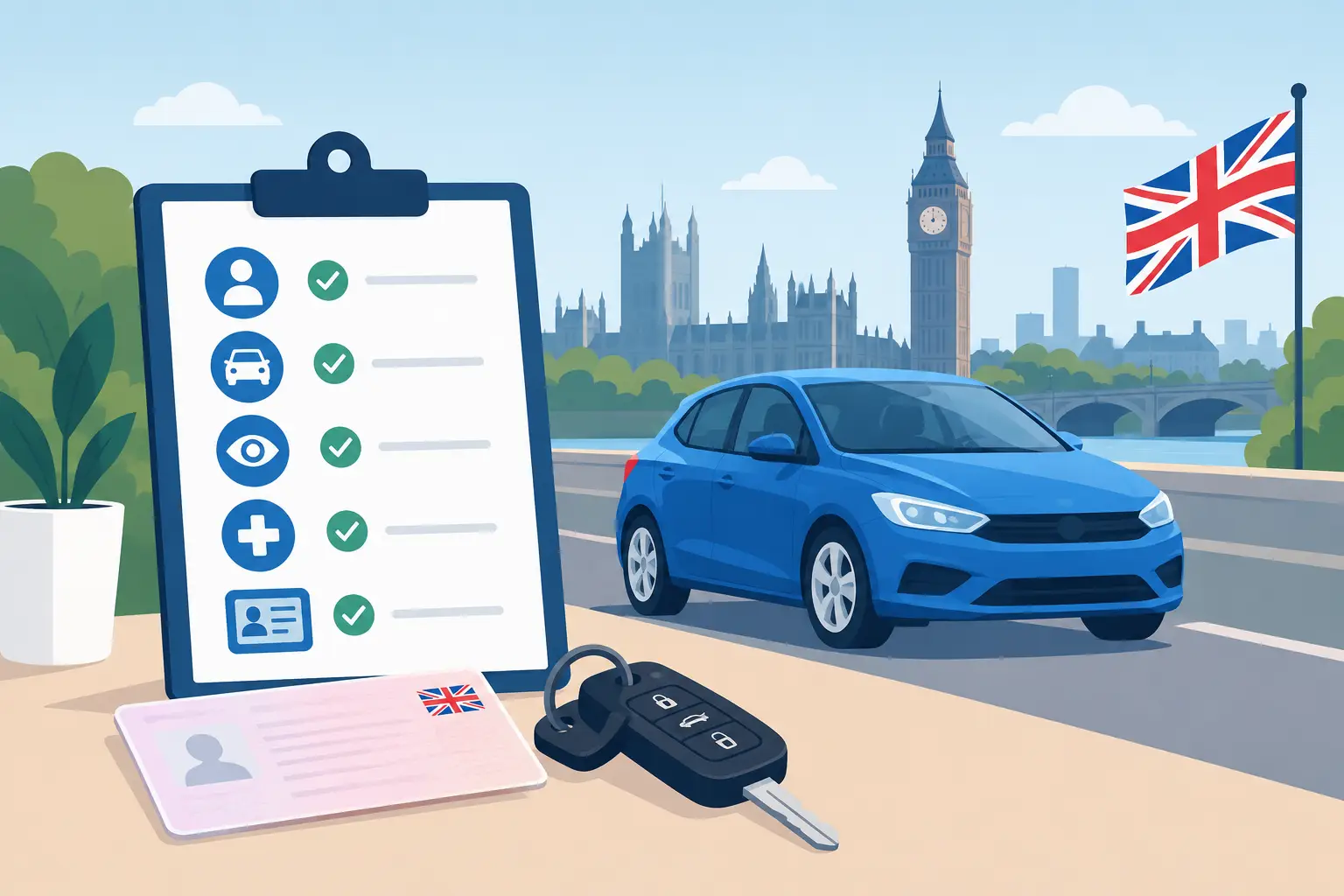
Getting behind the wheel is exciting, but it comes with real legal and safety responsibilities. If you are asking, what are the full requirements for driving in the UK?, the answer depends on whether you are learning, taking your test or driving independently on a full licence. Knowing the rules early helps you avoid costly mistakes and lets you focus on building the calm, safe driving skills that will carry you well beyond test day.
What are the full requirements for driving in the UK?
For most people driving a car in Great Britain, you must be old enough, hold the correct driving licence, meet the eyesight standard, be medically fit to drive and use a roadworthy, insured and taxed vehicle. Learner drivers have extra requirements around supervision, L plates and insurance. To drive alone, you must pass both the theory and practical driving tests and receive a full driving licence.
The rules below apply primarily to car drivers in England, Scotland and Wales. Northern Ireland has its own licensing process in some areas, so its application and test arrangements can differ.
Start with a provisional driving licence
You normally need to be 17 before you can drive a car on public roads. You can apply for a provisional licence before then, usually from the age of 15 years and nine months. If you receive the enhanced rate of the mobility component of Personal Independence Payment, you may be able to drive a car from age 16.
Your provisional licence is your legal permission to learn. You will need to prove your identity, provide your address history and confirm that you meet the minimum eyesight standard. A UK driving licence application also asks for details such as your National Insurance number where available.
A provisional licence does not allow you to drive alone. It allows you to practise only when you meet all learner-driver conditions. Treat it as the start of your training, not simply a document to tick off a list.
Manual or automatic: choose carefully
You can learn in either a manual or automatic car. Passing your practical test in a manual car gives you entitlement to drive both manual and automatic cars. Passing in an automatic gives you an automatic-only licence.
Neither choice is automatically better. Automatic lessons can suit learners who want to concentrate on road awareness, planning and confidence without managing clutch control and gears. A manual licence offers more flexibility if you expect to drive different vehicles in the future. The right decision depends on your needs, timeframe and confidence, and a good instructor can help you make it.
Meet the eyesight and health requirements
Before driving, you must be able to read a number plate made after 1 September 2001 from 20 metres away. This is checked at the start of the practical driving test. If you cannot read it, the test cannot continue.
You must also have an adequate field of vision and use glasses or contact lenses whenever necessary for safe driving. If your licence has a code requiring corrective lenses, you must follow it every time you drive.
Some medical conditions must be declared because they may affect safe control of a vehicle. These can include certain eyesight conditions, seizures, diabetes treated with insulin, serious heart conditions, neurological conditions and some mental health conditions. Having a condition does not always mean you cannot drive. It may mean that your licence is reviewed, issued for a shorter period or restricted while medical evidence is considered. Never guess on this point – failing to tell the licensing authority about a notifiable condition can lead to a fine and may invalidate your licence.
The rules for practising as a learner
Once you have a provisional licence, you can take professional lessons or practise privately. Either route can be valuable, but private practice should reinforce the structured techniques you are learning rather than replace them.
When practising in a car, you must be accompanied by someone who is at least 21 and has held a full licence for the type of vehicle being driven for at least three years. For a learner in a car, that supervisor must hold a full manual licence if the learner is practising in a manual vehicle.
The car must display L plates clearly on the front and rear. In Wales, you may use D plates instead. You must also be properly insured to drive the vehicle. Do not assume that a parent, friend or partner’s insurance automatically covers you. Learner-driver cover must be specifically included.
You can practise on most roads, but motorway driving has a separate rule. Learners may drive on motorways in England, Scotland and Wales only with an approved driving instructor in a dual-controlled car. You cannot practise on a motorway with a family member or friend supervising.
Learn to drive safely, not just to pass
The legal minimum is only one part of becoming ready to drive. The practical test assesses whether you can drive independently and safely in a range of normal traffic conditions. That means you need to develop judgement, not memorise routes or manoeuvres.
Your lessons should cover moving off and stopping safely, meeting traffic, approaching junctions, roundabouts, lane discipline, speed control, parking manoeuvres and independent driving. You will also need to show that you can use mirrors effectively, respond to hazards early and make decisions without rushing.
For learners in busy areas such as Tottenham, Wood Green, Barnet or Enfield, confidence often grows through repeated practice with complex junctions, buses, cyclists, pedestrian crossings and changing traffic flow. Test-route knowledge can help you understand local road layouts, but safe driving skills must work wherever you travel.
Pass the theory test before booking practical test day
Before you can take the practical car test, you must pass the theory test. It has two parts: multiple-choice questions and hazard perception. You need to pass both parts in the same sitting.
The multiple-choice section checks your understanding of the Highway Code, road signs, stopping distances, legal responsibilities and safe driving principles. Hazard perception measures how quickly you spot developing risks, such as a child near the kerb, a vehicle emerging from a side road or traffic braking ahead.
The theory test pass certificate lasts for two years. If you do not pass your practical test within that period, you will need to retake and pass the theory test before booking another practical test. This is one reason to prepare consistently rather than rushing your theory test before you are ready to progress with driving lessons.
What you need for the practical driving test
On practical test day, you need a valid provisional licence and a valid theory test pass. You must use a suitable, roadworthy car that meets test requirements, is insured for the test and displays L plates if you are still a learner. If you are using your instructor’s car, they will normally check these details for you.
The driving examiner will start with an eyesight check, then assess your driving on a variety of roads. The test includes independent driving, following either sat-nav directions or traffic signs. You may also be asked one vehicle-safety question before driving and one while driving, often called the “show me, tell me” questions.
You can make a minor driving fault and still pass, but serious or dangerous faults lead to a fail. The aim is not perfection. It is controlled, safe driving with sound observations, appropriate speed and good decision-making.
Requirements after you pass your driving test
Passing the practical test gives you a full licence for the category of vehicle you passed in. However, you must still meet the everyday legal requirements before driving independently. Your vehicle needs valid insurance, vehicle tax and a current MOT where one is required. It must also be safe and roadworthy, with working lights, legal tyres, effective brakes and clear number plates.
You must never drive while under the influence of alcohol or drugs, or when tired, distracted or unwell enough to affect your driving. Using a hand-held mobile phone while driving is illegal, including when stopped in traffic. Plan your journey, set sat-nav directions before moving off and keep your attention on the road.
New drivers should also understand the two-year probationary period. If you build up six or more penalty points within two years of passing your first driving test, your licence will be revoked. You would then need to apply for a new provisional licence and pass both tests again. P plates are optional, but the responsibility to drive safely is not.
Driving is a skill built lesson by lesson, journey by journey. Give yourself time to learn properly, ask questions whenever something feels unclear and choose tuition that helps you become confident in real traffic, not just confident for one test route. At CJL Driving School, the focus is simple: build safe habits, trust your judgement and drive safe and smart from day one.

Leave A Comment